Sunday, October 7, 2012

A ray of new hope-Searching on line for your Daada-Daadi much easier

 https://fbcdn-sphotos-b-a.akamaihd.net/hphotos-ak-snc6/p206x206/603416_357068567704936_1712314548_n.jpg
The earliest memories that London-based Pakistani journalist Saima Mir had of her family were anecdotes her grandmother shared with her. These stories helped her put the pieces of her ancestry together and gave her a fair idea about the family's origin before and after Partition.

 https://fbcdn-sphotos-f-a.akamaihd.net/hphotos-ak-ash4/p206x206/316837_361989600546166_589837373_n.jpg
Another source which she relied on like most Asians, were black and white family photos tucked away in albums — her parents' wedding day, early photos of their time in England and her childhood. Unfortunately, photographs and memories fade away with time. And she felt this most keenly when her grandmother developed Alzheimer's disease and started losing the memories she treasured so much. That's when Saima felt the urge to preserve the history of Asians, who like her family had migrated to different parts of the world. And thus, www.whosthedaadi.com was founded by Saima and another partner Alex Street, whom she met through social media.

 This is a social ancestry website dedicated to South Asians and helps them connect with each other and discover their past. "Indians and Pakistanis have a shared history. My father tells me stories of the Sikh friends he left behind during Partition and never saw again. There are many such stories — families that have lost touch and friends that have parted ways. And this website will help them," says Saima.

Alex, incidentally, works as a games developer, and it was the challenge of this project that attracted him to it. "The aim is to create a completely searchable database of 100,000 names which will go live soon. We plan to be the world's largest single source of ancestry data for South Asians. And it will be based on social data provided by our users," says Alex. A n d t h at 's wh at m a ke s whosthedaadi.com different from other ancestry websites. It will be especially useful for those with few records. "It's a struggle to get birth and death records of parents or grandparents if they were born in India before the 1940s and 1950s as there was nothing written officially in most cases or papers were lost. So, the only way to preserve these are through user-generated information ," Saima adds.

Although, the website was initially aimed at connecting British Asians, it has received tremendous response globally. "About 40% of the total traffic is from the UK, while Pakistan, India and the US deliver another 10% each. The remainder is split across Asia and parts of East Africa in places like Kenya, Singapore, UAE and Saudi Arabia. What's fascinating is the fragmented distribution of South Asians and how relevant this issue is for them" says Alex. With most families connecting via Facebook, Skype and other forms of social networking to speak to relatives abroad, it seemed natural for both Alex and Saima that it should play a huge part in Daadi. The website allows users to create their own family trees, database of birth and death records and family photos which can be shared.

Arfah Farooq, a student from London heard about the website on Twitter where the site received support. "I've always wanted to make my own family tree, and hopefully this website will help me find my lost relatives," she says. As a second generation British-born Bangladeshi, her family was among millions of people with South Asian roots who settled in the UK. Some migrated for work with the East India Company , and after World War II, to work as labourers and factory workers in other countries. Others migrated from East Africa during the 70s and 80s to escape persecution. And then, there are the more recent arrivals of students , bankers, businessmen and restaurateurs who came to London to join their family.


Free photo sharing and family tree building tools - social ancestry for South Asians

whosheDaadi is the brainchild of Saima Mir and Alex Street. Brought together by serendipity and the magic of social media, these two want to change your world.

Saima Mir, Founder

whostheDaadi is the brainchild of Saima Mir, for all press, media, data policy and investment enquiries please contact Saima. In addition to founding whostheDaadi, Saima Mir is also an award-winning multi-media journalist. She has worked for the BBC, and currently freelances for a number of organisations including The Guardian and The Times. Saima is also involved with the Jinnah Awards & Brit Writers.

  Alex Street, Founder

Alex built the whostheDaadi platform, for all technical, investment and webmaster enquiries please contact Alex. As well as being a technical and strategic lead for whostheDaadi, Alex has also worked as a management consultant and as digital planner for a games development company. Alex is also a keen climber, mountaineer and founder of MountainFilms.


Missing Kid in India is Threat for us,but we have opportunity if we have national Databank containing DNA from parents of missing children.


https://encrypted-tbn0.gstatic.com/images?q=tbn:ANd9GcSykuSGUr1Ba1ObN54jfvNySUa9uEaDDTlpuMDyDrn_0skLxHJx8A
It was a strange phone call, says Anuj Bhargava. A man called Arun was calling from Belgium. Sometime in the '80s, said Arun, he'd been sold for $8,000 to a Belgian couple by an orphanage in Chennai. He had an old photograph with him. Of him and a man — the man who had abducted Arun from his family. 

Could Anuj help find his family? Anuj, a trustee of the NGO National Centre for Missing Children, called his local newspaper in Indore asking whether they had a correspondent in Chennai and if he could track down Arun's family. Soon, a woman who claimed to be Arun's mother was found. But only a few weekslater, Arun called back to say the search should be called off. Apparently, the police had begun to harass the woman. 


Anuj wonders how much longer this will carry on. His website www.missingindiankids
.com puts up pictures of missing children from around the country, asking viewers to take printouts and put them up. So far, in 10 years, the website has been able to reunite just six children with their parents. That's a tiny drop in the ocean, considering the government recently put the figure at 12 to 13 lakh missing children in India every year.

Yet, this is not a lost cause. People like Arun, can be reunited with their parents , no matter how many years later the children reappear, often as adults. And a solution is being offered to us from Spain, by Professor Jose A Lorente, a forensic geneticist with the University of Granada most famous for identifying the remains of Christopher Columbus and South American liberator Simon Bolivar. Nowadays, though, he worries more about the world's missing children. 

It started in Lima (Peru) a decade ago, while Lorente was there to identify the bodies of some terrorists. When he saw the street kids, he wondered what the police were doing to send them back to their parents. "Nothing," the police said. That spurred him to go to 15 countries — including Guatemala, Peru, Brazil, Indonesia, Malaysia, Thailand and Nepal — to build databanks which store the DNA of parents who have lost children. That way, when the children are found, a search of the DNA databank will allow the child to be reunited the parents. 

Lorente, however, has had little luck in India. India has been talking about a national DNA databank — which would encompass the parents of missing children , DNA from the 30,000-50 ,000 dead bodies that are found each year, and from convicted criminals — since 1998, when the idea was first mooted at the Centre for DNA Fingerprinting and Diagnostics in Hyderabad, but nothing much has happened. In July 2007, after the abduction and murders of children in Nithari (Noida), the NHRC had in a report recommended that a national database of missing children be compiled on a priority basis. The database would be made up of text and pictures, no DNA was to be collected. But PC Sharma, the former NHRC member who presented the report, says the database was never built. While officials within the NHRC hinted that the responsibility was passed on to the then newlyconstituted National Commission for the Protection of Child Rights (NCPCR), Professor Shantha Sinha, chairperson of NCPCR, says she was never made aware of it being passed on to her. But yes, she says, the database is needed. 

More optimistically, Prem Narain, secretary of the ministry of women and child development — which will have to take final responsibility for a database or DNA databank of missing children — had said last month that they will soon be inaugurating an online database of such children. To be called Track Child, Narain said he hoped the database would finally help return as many as 40% of kids to their parents. He added Track Child will "definitely be inaugurated by the end of this year or early next year" . But that is not enough. A simple database does not stop illegal adoptions. Today, how do we know that a man or woman giving up a child for adoption is actually that child's parent? "A DNA test would ascertain that," says Lorente. "It would also push down the number of children who are trafficked and forced into prostitution." Lorente's databanks have so far reunited about 550 children with their families, and have stopped 200 illegal adoptions. 

Dr VK Kashyap, former chief of the directorate of forensic science services (DFSS), which will finally be responsible for the national DNA databank, says Rs 20 crore had in principle been approved for a pilot project. "The databank would be built on the public-private partnership model. There would, finally, be 30 to 40 collection centres around the country where DNA would be collected. The collection centres would be run by private companies but the central databank would be managed by the government." 

He is hard-pressed to answer why it hasn't been done as yet. So is Dr CN Bhattacharya, the current chief of the DFSS. On the phone from Guwahati, where he is touring, he says he has just taken over the DFSS, so it is difficult to say why it's taken so long to build the databank. But he says the pilot project will take off soon. Narain adds that a DNA databank of missing children, while wanted, is difficult to imagine right now. That maybe the numbers are too big here for us to be able to afford it. According to Kashyap, each DNA test should cost about Rs 1,000. 

The NGOs are harsher. The government is slow to move, they say, because so many children go missing every year. If the figures are put up for public display , the numbers will add up so fast, there will be a furore. What will the government do then? 

Meantime, small disparate efforts are being made to try and stop this flood of missing children. Rishi Kant of the NGO Shakti Vahini talks about starting an emergency number on which worried parents would report the loss of a child. His NGO then will watch out for those children in the railway stations of Delhi and Mumbai, the major distribution points for trafficked children. Kant, who talks about a 16-year-old girl being rescued from the Delhi home of a doctor couple on Friday — she'd been abducted as a four-year-old and for the last year the doctor had been sexually abusing her while his wife had been feeding her anti-pregnancy pills, says his team harangues the police every day to raid another home. Getting the girl to her parents, though, is a different story.

You have every right to a beautiful life-Long living isn't important,Better Living is important

http://outdoorsbetty.files.wordpress.com/2012/09/i-have-the-qualities-i-need-to-live-well.jpg?w=610&h=404

Stydy as if you were to Live foreever
Live as if You were to die tomorrow.
---------------------Mahatma Gandhi

Every work however big or small has its own importance and deserves respect and recognition. Long living isn't important, better living is important. These were the words of wisdom shared by trainer in management skills Sunil Keshwani to staff and students of Birla Institute of Technology Patna (BITP) at a workshop on 5th,October,

Keshwani conducted an activity 'Travel Light' where the audience were questioned about issues that burdened their lives.

Motivational video clips added value to Keshwani's tips. "A common setback that people go through is the incapability or hesitation in starting any work," said Keshwani, adding, "what is important is to start a work rather than thinking about its outcome and once you start, the world is sure to follow."in the same way "cover of thousand miles starts with first step.

General discussions on job interviews and group discussions were held to help students during placement time. Several queries of students related to the corporate world were also answered by Keshwani. The three-day personality development workshop that concluded on Friday was also attended by BITP director SL Gupta and several faculty members.

Lalit Narayan Mishra institute: Dual degree course of Masters in Applied Management (MAM) at the Lalit Narayan Mishra Institute of Economic Development and Social Change has got recognition from the All India Council for Technical Education (AICTE) from the 2012 session. Earlier, BBA and BCA courses (session 2012-15) also commenced at the institute. Institute executive director Jagannath Mishra expressed his gratitude to the AICTE and the state government for getting the new courses started at the institute.

PU employees' association: About 19 members of Patna University (PU) employees association went on a two-day fast starting Friday demanding removal of finance officer, recruitment of kin of deceased employees, increase in grade-pay of fourth grade employees and clearance of arrears among other things. The members alleged that VC and registrar of PU had assured to clear all matters in July itself but that did not happen. The workers threatened to intensify their agitation if their demands are not fulfilled.

Patna Women's College: Patna Women's College will organize its alumni meet on the college premises on Saturday evening.

Gurudwaras in Patna Sahib is a very ancient, eventful historic town of India. ..... following recollecting the important historical facts of Guru's life,Gurudwara Patna Sahib is regarded as the centre for propagating Sikhism in the east. As history would have it, Takht Sri Patna Sahib is the second accepted and acknowledged Takht of the Sikhs


http://www.sikhtourism.com/images/patna-sahib.jpg

Sikh pilgrimages

Patna is one of the holiest cities in Sikhism, as the tenth Guru of the Sikhs, Guru Gobind Singh, was born here in 1666 and spent his early years before moving to Anandpur. Patna was also honoured by visits from Guru Nanak in 1509 as well as Guru Tegh Bahadur in 1666.
  • Takht Shri Harmandir Saheb is one of the Five Takhts of Sikhism. The Gurdwara at Patna Sahib is in remembrance of the birthplace of Guru Gobind Singh, the tenth Guru of the Sikhs.
  • Gurdwara Pahila Bara, commonly known as Gurdwara Ghai Ghat, is dedicated to Guru Nanak Dev, who during his visit to Patna stayed here in 1509 A.D. Guru Tegh Bahadur along with his family visited this place in 1666 A.D.
  • Gurdwara Gobind Ghat is where the child Guru Gobind Singh used to play with his playmates on the bank of the Ganges. It is situated on the bank of river Ganges and hardly 200 yards from Takht Shri Harmandir Saheb. It is also known as Gurdwara Kangan Ghat.
  • Gurdwara Guru ka Bagh - This Gurdwara is situated 2 miles away from the birthplace of Guru Gobind Singh.
  • Gurdwara Bal Leela - This place is just a few meters away from Takhat Patna Sahib. Guru ji were playing with other children during his childhood. Gurdwara Bal Leela is also known as Maini Sangat.
  • Gurdwara Handi Sahib - This Gurdwara was built in the memory of Guru Teg Bahadur, as he with Mata Gujri and Bala Preetam stayed here in 1728

Patna Sahib is a very ancient, eventful historic town of India. Now the capital of Bihar, it can rightly be proud of its glorious past, more so because of the birthplace of Sri Guru Gobind Singh, the Tenth Guru of Sikh religion.

According to historians almost two thousand years after Lord Buddha, Guru Nanak visited Patliputra, during his first journey to the East, in the beginning of Sixteenth century. There were 64 gates and 670 towers protected by moat and wooden walls. Guru Nanak entered Patna through the western gate and stayed at Bhagat Jaitamal's House now Gurudwara Gai Ghat.
Salis Rai Johri a middle aged Jeweler of Patna City was influenced by the divine personality of Guru Nanak, through his follower Mardana, requested Guruji to sanctify his home. Salis Rai Johri was also a man of religious and poetical bent of mind.
Due to his true devotion Guru Nanak accepted his request and stayed for about four months at Salis Rai's house. A congregational center was established and people of locality used to attend it daily in the morning and evening. At the time of Guru Nanak's departure, Salis Rai Johri's trustee servant Adhraka by name was appointed as head of this congregational center with the purpose to continue the propagation of Guru Nanak's mission.
Guru Tegh Bahadur, the ninth guru of Sikh religion, along with his family members started a preaching tour to the East. In the beginning of 1666 A.D. he reached Patna and stayed at Jaitamal's house where Guru Nanak had made a center. The fourth successor of Salis Rai Johri's Sangat (Center) namely Ghanshyam the great grandson of Adhraka was also ambitious to get blessing from the ninth successor of Guru Nanak. When he heard of Guru Tegh Bahadur's visit to Patna, he brought Guru's family in a procession from Jaitamal's House to Salis Rai Johri's sangat. (Now the birthplace of Sri Guru Gobind Singh called Takhat Sri Harmandirji).
When Guru Tegh Bahadur arrived at Allahabad, with the will of God, the spirit and light of Guru Gobind Singh had descended and manifested itself in mother's womb. Mata Gujri had conceived this great son of God namely (Guru) Gobind Singh. Guru Tegh Bahadur while leaving his family at Patna proceeded on tour to Assam and Bengal. All types of facilities were provided to Guru's family by the local devotees of Patna.
Guru Gobind Singh was born in Patna Paus Sudi 7, Sambat 1723 corresponding to 23rd December 1666 A.D. (Guru) Gobind Singh also mentioned the name of Patna in his autobiography (Bachitra Natak).

It was there that my light had appeared I was born at Patna city.

This holy birthplace Patna is renamed Patna Sahib keeping in view its sanctity. It is the second sacred throne (seat authority) out of five. This holy birthplace is not only unique to the Sikhs but also Bethlehem to the Christian, Mecca to the Muslims, Kashi to the Hindus and Vaishali to the Jains.

Gobind Rai spent about six and half years of his childhood here in Patna. According to the chronicles Hindu devotee Pandit Shiv Dutt and Rahim Bux, Nawab of Patna Pir Arifudin and Syed Bhikham Shah became his earliest admirers.

Gurudwara Patna Sahib is regarded as the centre for propagating Sikhism in the east. As history would have it, Takht Sri Patna Sahib is the second accepted and acknowledged Takht of the Sikhs.

It was 'Sher-e-Punjab' Maharaja Ranjit Singh who, first of all, undertook the task of raising a monumental Sikh Temple at this place. As a result of an earthquake, the celestial edifice came to be a heap of dust. With the co-operation of the Sikh masses, the golden fabric, as it stands today, has come into its own. 
 
Some relics of the tenth Guru are also preserved in Patna Sahib. Among them is a pangura (cradle) with four stands covered with Golden plates. Guruji during his childhood used to sleep in this cradle. Moreover, four iron arrows, sacred sword of the Master and a pair of his sandals are also preserved. Hukamnamas of Guru Gobind Singh and Guru Tegh Bahadur contained in a book are also kept in this holy Gurudwara.

 http://www.takhtsripatnasahib.com/images/stories/gurumata33.jpg 
Guru Gobind Singh Ji's Six Years In Patna. 

Guru Tegh Bahadur traveled through Kaithal, Kurukshetra, Delhi, Agra, Etawah, Kanpur, Allahabad, Banaras, Sasaram, Gaya, and then reached Patna in the mid of 1666 AD.
He mostly traveled on the lines of Guru Nanak and visited the congregational centers, which had been already established by Guru Nanak. (Founder of Sikh religion)

On the departure of Guru Nanak from Patna it was requested by his followers for his next visit. Thereby Guru Nanak predicted to bless the followers as 9th Nanak (Guru Tegh Bahadur). When the 9th successor of Guru Nanak reached Patna the devotees gave them warm welcome and every possible facility was provided to his family.

Mother Gujri, the wife of Guru Tegh Bahadur was conceived and was therefore thought proper to choose some convenient place rather to proceed further on tour along with Guru Tegh Bahadur. In accordance with the circumstances the family was given all the facilities and they decided to stay here in Patna. Guru Tegh Bahadur, while leaving his family under the supervision of Bhai Kirpal Chand, his brother-in-law and devotee Sikhs, proceeded alone towards his journey to the East i.e. Assam and Bengal.

An old donated house of Salis Rai Johri (A jeweler of Patna Sahib) to Guru Nanak has been converted to congregational center of Sikh religion. Once again the sacred light emerged on 22nd Dec 1666 AD, when (Guru) Gobind Singh (10th guru of Sikh religion) was born. The son of God had taken birth to dispel the darkness of world. This was ordained by the Almighty Supreme Lord.

Guru Tegh Bahadur was at Dhubri (Assam) when he received the happy news of the birth of his child at Patna. Great rejoicing took place and donations were given to the poor and needy on large scale. The admirers and devotee Sikhs took their journey towards Patna to see the sacred soul (Gobind Rai).

Muslims Sufi saint of Great repute Pir Bihar Shah of Guam bowed his head towards East (Patna). At this his Muslim disciples demurred that being Muslim in true sense he should not make such respectful gesture except towards Kawa in the west. Pir Bihar Shah could feel the presence of a newborn child (Gobind Rai). He had not paid any homage to the mortal or man-made God (statue). It was homage to the great soul.

After few days' hard journey on foot, Pir Bihar Shah reached Patna to seek the blessings of new child Prophet. Pir was also in a confused state of mind whether the new child prophet would protect the Hindus or the Muslims. The child Gobind Rai was too little to be placed, outside the house in the hands of some outside visitor or devotee. After two days hunger strike and resistance Pir Bihar Shah was allowed to see the child.

Pir Bihar Shah put two sweet pots with intention that if the child prophet will put his hand on right, he would mean to protect the Hindus and if he will put his hand on the left, he would mean to protect the Muslims. Pir Bihar Shah was surprised to know Gobind Rai placed his both hands on both the sweet pots to justify that he will protect both Hindus and Muslims. He took Birth to establish the righteousness to protect the meek and punish the evildoers.

From the very child hood the saint and warrior activities of Gobind Rai had become the object of wonder and adoration for many admirers in Patna. Gobind Rai's favorite toys were bows, arrows, swords etc. The most daily game for Gobind Rai was to make artificial fortification and the art of war. The defensive party was to take protection in the fort. Under the directions of Commander Gobind Rai the instructions were given how to attack and the methods to make it successful on the defensive side. The winner party was awarded and all the playmates were served with delicious food at the end of day's play and fighting. Gobind Rai's great pleasure consisted of leading his companions through mock maneuvers. Both mother Mata Gujri and Grand Mother Mata Nankijee was greatly delighted to see and serve the companions of Gobind Rai. The both prayed daily to the Almighty God for the protection of the child.

There was a small well of sweet water in the courtyard of Mata Gujri's house. Ladies of the locality had great choice to take water from the sweet well daily. Another play trick of Gobind Rai was to pierce the earthen pitchers with earthen golies. The ladies did not enjoy this fun and mother also resented. She pacified them and replaced the broken pitchers. When Gobind Rai was asked not to break the pitchers, he replied that he did not damage the pitchers rather killed the snake in it, otherwise the poisonous water would harm the family. When the pitcher was checked the snake was found pierced by the arrow of Gobind Rai. All were astonished on the farsighted activity and divine teaching of Gobind Rai.

At the innocent face of Gobind Rai, the admirers read the sign of eternity. An old Brahman of Patna City, Pandit Shiv Dutt was deeply impressed by the divine personality of child Gobind Rai. His long outstanding spiritual quest was quenched when he saw the image of child prophet in his contemplation. To whom Pandit Shiv Dutt was worshipping for the long past had appeared personally before him.

Before this Pandit Shiv Dutt believed in idols worship for his mental peace and practiced many rituals and ceremonies and austerities. He was popular among his society members but inspite of this his religious performance could not satisfy his inner thirst and he was feeling emptiness in his heart and duality in his mind. One day during the contemplation mood on the bank of river Ganga Pandit Shiv Dutt realized the divine image of Gobind Rai in his sub-consciousness. The light of the sacred soul and his very presence fulfilled the long desire of Pandit Shiv Dutt. The lovely divine face of child prophet now was the focus of meditation.


Guru Gobind Singh ji maharaj immortalized few places in Patna Sahib, which later on where popularly known as Gurudwaras. Gurudwara Gobind Ghat situated on the bank of river Ganga is hardly 200 yards from Harmandir Sahib. It is also popular as Kangan Ghat where Gobind Rai had thrown his gold bangle. On the same bank Gobind Rai had blessed mental peace to Pandit Shiv Dutt, a devotee of Sri Ram Chandra.
Raja Fateh Chand Maini a local chieftain and his queen were one of the great admirers of Gobind Rai. Though they had everything of worldly satisfaction yet being childless, felt a great gap in their life and darkness in future. This made them unhappy and disappointed. As per prevalent Hindu tradition a son did not inherit their property, but performed all the religious rites after their death to ensure their passage across the phenomenal world.
King Fateh Chand and his queen one day narrated the sad incident of their life to Pandit Shiv Dutt because this Pandit was very popular among the Hindu society due to his pious life. He intimated that the heavenly child Gobind Rai could change their sad and pessimistic life into hope and immortality. Now both the king and the queen had a new object of their life and more admiration for the child prophet. Love and yearning grew day by day. One day queen was in her meditation room worshipping God. Gobind Rai along with his playmates entered the place, sat in the lap of the queen and said in lovely voice 'mother', due to full day's play we are tired and hungry, give something to eat. The sweet melody word 'mother', thrilled the childless queen.
Before this queen was never called by anyone, 'mother'. This pronouncement filled the long-outstanding gap in her heart. She embraced Gobind Rai in her arms. Both the King and the Queen were overwhelmed with joy and gratitude.

Boiled grams and purris already prepared for their own purpose were served to Gobind Rai and his companions. The same tradition till now is preserved and boiled grams are served to every visitor and pilgrim, in sweet memory of the visit of Gobind Rai. This visit changed the life of the King and the Queen, into happiness. They adopted Gobind Rai as their own son and decided to donate the palace and property in the name of Gobind Rai. The palace was converted into congregational center. Later on a beautiful Sikh Shrine was constructed.

While returning home, Gobind Rai reported to his mother that he had made another mother. Mother (Gujri) asked, "Then how will one son play in two laps".
"Just as one moon is visible in two pools at the same time" replied Gobind Rai.
 The following historical things are worth seeing:
  1. A pair of little shoes of Gobind Rai.
  2. A little tree of Karonda, remains ever blooming that had grown up from the toothbrush of Gobind Rai.
Two Muslim nawab brothers of great repute at Patna, namely Rahim Bux and Karim Bux had great devotion towards Guru Nanak house. They were very much impressed by heavenly child Gobind Rai. As we have mentioned earlier that from the very childhood Gobind Rai had become popular because of his various activities.
When Guru Tegh Bahadur father of (Guru) Gobind Singh returned from his Assam and Bengal tour he made his temporary halt outside Patna City in the deserted garden of two above mentioned nawab brothers. The holy visit of Guru Tegh Bahadur turned the dry and deserted garden into greenery. As this incident was reported to Muslim brothers they reached to see the revered Guru and their garden along with their courtiers. Guru Tegh Bahadur asked three times the nawab brothers about the ownership of the garden. The nawab brothers decided to donate it in the name of Guru as it was turned green because of holy and pious visit of Gurujee. They submissively requested to accept their little offer of the garden. It is about 4 kms from the Takhat Patna Sahib on Patna-Fatwah Road.
At present this garden is popularly known as "Gurudwara Guru Ka Bagh". There is a Sarowar and beautiful gurudwara. It was the place where Guru Tegh Bahadur met his son for the first time.
After a short stay in Patna, Guru Tegh Bahadur made his programme for Punjab because the Hindus of Punjab were being threatened by force conversion into Islam under the fanatic policy of Aurangzeb. They were passing through a critical time. Instructions were given to Gobind Rai to reach Anandpur Sahib along with mother, grandmother maternal uncle at their convenience.

Gobind Rai's departure from Patna to Punjab caused a great displeasure and sorrow to the inhabitants of Patna City. On the day of departure, men and women, Hindus and Muslims, old and young, rich and poor, and his playmates came a considerable way out of the city to see off the revered young prophet Gobind Rai.

It was the most torturing scene when they bade farewell to Gobind Rai and his family members. All the admirers and devotee Sikhs prayed for their happy journey.
The perennial consolation left behind for devotees in Patna are sacred relics, which were dearer to Gobind Rai during his playtime with his companions. Another sweet memory, is the late evening prayer after his return 'from play which now has become tradition. Till now this practice of prayers is still in vogue.

The first stopper after departure from Patna, was made at Dinapur in the little house of old lady namely Yamuna Devi. This devoted old lady prepared Khichri for Gobind Rai in a little earthen pot (Handi). The prepared Khichri was served to a large no. of devotees and yet did not finish. Now there is a gurudwara after this pot namely 'HANDI SAHIB'. It is about 20km from Takhat Harmandirji Patna Sahib. An annual function is held under management of Prabandhak Committee Sri Takhat Harmandirji Patna Sahib.

Patna Sahib is a Takhat(seat of authority)of Sikh Religion. It is second in number out of five Takhats viz.,Sri Akal Takhat(Amritsar), Sri Anandpur Sahib (Ropar, Punjab), Sri Hazoor Sahib (Nanded, Maharashtra) and Sri Dumduma Sahib (Bhatinda, Punjab).

The railway station of Patna City has been converted to Patna Sahib in pious and sweet memory of Guru Gobind Singh's birth place in 1978 .All tourists in Patna or State guests have great attraction to pay their homage to this historic birth-place. Without its visit one feels a gap in one's life.
All donations paid to this holy shrine are exempted from income tax. There is a big lodging and free Kitchen (Guru ka Langer) for visitors from all over the world.
The following worth seeing historical relics/articles are preserved at Takhat Patna Sahib.
 
  1. "Sri Guru Granth Sahib" called Bare Sahib containing signature of Sri Guru Gobind Singhji Maharaj.
  2. "Chhabi Sahib" oil painted very big picture of Sri Guru Gobind Singhji Maharaj of his young age.
  3. "Panghura Sahib" a small cradle with four stands covered with gold plates on which Sri Guru Gobind Singhji Maharaj used to sit or sleep, when he was a boy.
  4. A small "Saif" (Sword) of Sri Guru Gobind Singhji Maharaj.
  5. Four iron "Arrows" of Sri Guru Gobind Singhji Maharaj.
  6. One earthen round "Goli" of Sri Guru Gobind Singhji Maharaj.
  7. One small iron "Chakri" of Sri Guru Gobind Singhji Maharaj.
  8. One small iron "Khanda" of Sri Guru Gobind Singhji Maharaj.
  9. One small iron "Baghnakh-khanjer" of Sri Guru Gobind Singhji Maharaj.
  10. One wooden "Comb" of Sri Guru Gobind Singhji Maharaj.
  11. Two iron "Chaker" of Sri Guru Gobind Singhji Maharaj.
  12. One pair "Sandal" made of elephant teeth of Sri Guru Gobind Singhji Maharaj of his boyhood.
  13. One pair "Sandal" made of sandalwood of Sri Guru Tegh Bahadurji Maharaj.14.Three wooden spinning instruments of Sri Kabir Sahib.
  14. Three wooden spinning instruments of Sri Kabir Sahib.
  15. One book containing "Hukumnamas" of Sri Guru Tegh Bahadurji Maharaj and Sri Guru Gobind Singhji Maharaj and their pictures, writings etc

Saturday, October 6, 2012

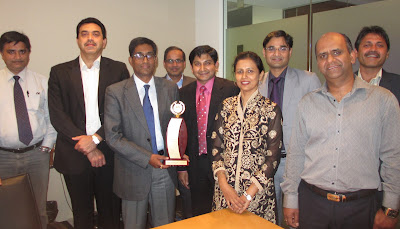
Bihar Foundation Australia Chapter (BFAC) conferred the first Bihar Pride Award 2012 (BPA) to Shri Pratyaya Amrit, Secretary, Road Construction Dept. for his outstanding contribution in development of Bihar.

https://blogger.googleusercontent.com/img/b/R29vZ2xl/AVvXsEgUZydgoCyrxUah2IM6Fck-tbZuv3wrSYJ-XlwfTHAb5UB2yPanViVONjoLc5jbMRdOP9NacqysZR8Ox7sFiU0FFBCYIqcqCcJ40YkVvKL6Z2bsCpx46i7S_F4FeUIFZ_jjeXjOQxxJgJBc/s400/IMG_13691.jpg

Sydney: Bihar Foundation Australia Chapter (BFAC) conferred the first Bihar Pride Award 2012 (BPA) to Pratyaya Amrit, Secretary, Road Construction Dept. for his outstanding contribution in development of Bihar.

"We strongly believe that Mr. Amrit truly deserves this recognition as he has shown that with sheer determination, sincerity, commitment, and hard work one can make so much difference in the society. With his outstanding work and leadership, he has not only inspired the people of Bihar but many more across the globe as well", said Amit Das, Secretary, Bihar Foundation Australia Chapter. He further said that it was everyone's social responsibility to encourage, promote, and recognize those who made all Biharis proud.
"We are thankful to Mr. Pratyaya Amrit, IAS, who came to Sydney to receive this honor and personally inspired the Bihar community by spending some valuable time with us. It was indeed a great moment for all of us", said Shekhar Kishore.

All the prominent NRI/NRB and executive committee members of Bihar Foundation Australia Chapter were present on the occasion.

While interacting with NRBs in Australia Amrit talked about ongoing development work and changed scenario in Bihar. He said that hard work is continued under dynamic political leadership of Nitish Kumar and Sushil Kumar Modi to bring prosperity and development to Bihar. He also highlighted many positive initiatives recently taken by the government.

Response of NRB/NRI was overwhelming about positive changes in Bihar. A number of guests expressed their desire to contribute in the development of Bihar in whatever way they could. While some were interested in doing work in the education sector, others were interested in disabled community service and health care.

Amrit, who pledged to give full support to the NRBs willing to contribute in the development of Bihar, said he was very happy to learn about the upcoming world-class engineering college being set up in Forbesganj by Amit Das.

The program was managed and coordinated under the young and dynamic leadership of NRI Amit Kumar Das, Secretary, Bihar Foundation, Australia Chapter.
Related Posts Plugin for WordPress, Blogger...

Love 4 Bihar on Facebook